

10 PFAS-Free Apparel Brands For Nontoxic Clothing (2026)

The Good Trade editors endorse products we’ve personally researched, tested, and genuinely love. We earn a commission when you purchase products or services through some of the links provided. Learn more about our methodology and business model here.
Our editors have been researching and wearing nontoxic clothing for over a decade. We’ve ranked our favorite brands that are PFAS-free, comfortable, and affordable, too.
Did you know that your clothing could be shedding microplastics? They come out in the wash, literally. Synthetic clothing releases microplastics in washing machines that go on to pollute water and soil systems, not to mention the indoor air quality you breathe in every day. Now, take a deep breath, look down at what you’re wearing, and think of what might be happening to your human system.
We are exposed to toxins every day through what we eat, drink, breathe, touch, and wear. Now, our bodies are resilient and work hard to keep us healthy, but PFAS are insidious, mimicking fatty acids and acting as endocrine-disrupting chemicals (EDCs) with adverse effects on our hormonal systems. There are so many things outside of your control, but when you do get the luxury of choice, we want you to be able to choose the products that will offer the most benefit to every system, including your precious human body. So let’s talk about those microplastics — what they are and how you can avoid them.
What are PFAS?
PFAS are man-made chemicals, otherwise known as forever chemicals, that have been in use since the 1940s in various products. These chemicals were initially developed for their strong resistance to heat, stains, and moisture, making them popular in a wide variety of consumer goods. Unfortunately, this durability is exactly what makes PFAS so problematic — they don’t easily break down, and instead build up in our bodies and ecosystems over time. As a result, they have contaminated groundwater sources, polluted drinking water systems, and entered the food chain, posing a growing threat to both human health and environmental safety. Today, the most common items you’ll find PFAS in are teflon, food packaging, and stain-, oil-, and water-resistant-fabrics.
The EPA notes that because of the widespread use of PFAS across decades, plus its persistence in the environment, PFAS can be found both people’s and animals blood. A concerning study from 2007, revealed that 98% of Americans have PFAS in their blood. This means that exposure isn’t just happening through direct use — it’s happening through the air we breathe, the food we eat, and the water we drink. Because PFAS bioaccumulate, small exposures over time can lead to significant levels in the body. Epidemiological studies reveal associations between PFAS and a variety of health consequences like liver and kidney disease, fertility issues, thyroid disease, and cancer. Although research is still ongoing, the growing body of evidence makes it clear that PFAS exposure is a serious concern that warrants our immediate attention.
“PFAS are man-made chemicals, otherwise known as forever chemicals, that have been in use since the 1940s in various products that resist grease, water, and oil.”
So when it comes to clothing, how can we identify if our favorite pieces have PFAS in them? PFAS are especially prevalent in activewear because of the tendency for companies to use stain-resistant and water-repellant (marketed as “moisture-wicking”) coatings. Apparel brands have historically prioritized performance over safety, relying on chemical finishes to deliver quick-drying, odor-resistant, and easy-care garments. However, these benefits often come at the cost of increased chemical exposure.
Synthetic fabrics like nylon and spandex, which are derived from petrochemicals, are used for optimum stretch and breathability. These materials are engineered for high-performance movement, but many of them are unfortunately finished with chemical treatments that can include PFAS. The effects of this can be even more harmful since our workout clothing sits tight against our largest organ (our skin) with our pores wide open as we sweat, taking everything in. During exercise, the heat and friction from movement can amplify chemical absorption, making it easier for PFAS to penetrate the skin barrier. This is especially concerning for people who wear activewear regularly or for long durations, such as athletes, fitness enthusiasts, or healthcare workers.
While many synthetic fabrics are derived from petrochemicals, it’s important to note that PFAS and synthetic fabrics are not synonymous and many synthetic fabrics available have not been impacted by PFAS. We can now find high-quality synthetic options that are free from harmful finishes and certified safe by third-party standards like OEKO-TEX Standard 100 and bluesign®. Awareness is key — by checking labels and asking brands for transparency, we can make safer, more informed choices that benefit our health in the long run.
The good news: More and more mainstream brands, such as H&M, Zara, and Levi Strauss & Co are producing affordable and stylish PFAS-free collections, but we love the below brands because they are PFAS-free, fashionable, and sustainably made with organic materials. These brands are taking it a step further by embracing eco-friendly production methods, non-toxic dyes, and circular design principles.
Our criteria:
Our editors have worn and loved nontoxic activewear clothing brands for over a decade. Here are our favorite brands for apparel that’s PFAS-free, organic, comfy, and affordable — from intimates to activewear to everyday closet staples. We regularly update this list with emerging brands that meet the criteria below:
- PFAS-FREE & ORGANIC | The brands on this list all use nontoxic production practices, are made with organic materials, and contain no PFAS.
- COMFORTABLE | Rather than looking to PFAS for their moisture-wicking properties, these brands rely on natural fabrics to create soft, breathable, and easy-to-wear pieces that are perfect for workouts or everyday wear.
- AFFORDABLE | We’ve included options at a variety of price points so that you can have high-quality materials without the high price.
If you’re interested in exploring more PFAS-free essentials, take a look at our guides to the best PFAS-free period panties and nontoxic activewear. Your endocrine system will thank you.
Table of contents
- Best For Budget Basics: Pact ($24+)
- Best For Nontoxic Essentials: MATE the Label ($28+)
- Best For Nontoxic Leggings and Biker Shorts: Reprise ($95+)
- Best For Soft Loungewear: Boody ($23+)
- Best For Outdoor Gear: Patagonia ($18+)
- Best For Circular Fashion: Outerknown ($30+)
- Best For USA-Made Cotton: Harvest & Mill ($12+)
- Best For Hemp Clothing: Jungmaven ($57+)
- Most Inclusive Sizing: TomboyX ($24+)
- Best For Giving Back: tentree ($40+)
- What is PFAS & why should I avoid it in clothing?
- How can I identify PFAS-Free clothing?
- What are the long-term benefits of wearing PFAS-free clothing?
- Are PFAS-Free clothes just as durable & stylish as regular clothing?
1. Pact
PFAS-Free Materials | Organic cotton
Size Range | Women’s XXS–3XL; men’s XS–2XL
Price Range | $24–$166
Pact names itself as “Earth’s favorite clothing,” and when we asked Earth to confirm, Earth agreed. Founded in Boulder, Colorado, in 2009 by Brendan Synnott of EVOL food, Bear Naked Granola, and Little Secrets candy, PACT clothing is carbon neutral, GOTS certified, PFAS-free, 100% organic cotton, and Fair Trade. Plus, they have accessible price points like $34 – $44 for their bestselling leggings. Their global trade model benefits everyone, including the planet, and all their packaging is 100% recyclable and FSC-certified.
Our Editor’s Review | ” I would’ve liked for a tighter, more supportive fit all around. I do think the thicker cotton will make this set great for camping, and it’s also good for lounging around my house in the colder months! (We’ve taken into account that another editor wore the bootcut leggings and the same crop top and loved it for Pilates and running errands. So, a few extra points to Pact for this!)” – Courtney Jay Higgins, Contributing Editor [Read our full review.]


2. MATE the Label
PFAS-Free Materials | Organic cotton jersey, organic thermal, organic fleece, organic terry, organic stretch, organic knit, linen, TENCEL lyocell, TENCEL rib
Size Range | Women’s XS–3X; men’s S–XXL
Price Range | $28–$248
MATE the Label’s mission is to provide people everywhere with essentials that are clean from seed to skin. They want to clean up the fashion industry one garment at a time, pledging to never use polyester, nylon, or polyamide in their products. All their domestic goods are knitted, cut, sewn, and dyed in LA in fair trade factories, no more than 15 miles from their office, and their main factory is only four miles away. Their goal? Make timeless essentials that never go out of style. MATE’s clothing is free from endocrine disruptors, so you’ll always be putting the best on your body!
Our Editor’s Review | “Let’s address the elephant in the room: MATE isn’t cheap. $150 for sweatpants feels a bit outrageous, especially in this economy. That said, I can see, feel, and tell the difference in the quality of these garments. I understand that I’m paying for organic fabrics that are safer for the planet and my body. Especially as I plan to wear these a lot over the fall and winter and even sleep in them, it’s comforting knowing that the fabric is safe for my health. MATE offers after-pay options and a price breakdown to help buyers see how much their sweatpants will cost them over time.” – Kayti Christian, Senior Content Strategist [Read our full review.]

3. Reprise
PFAS-Free Materials | OEKO-TEX 100 certified TENCEL™ Lyocell
Size Range | Women’s XXS–6XL; men’s XS–4XL
Price Range | $95–$125
Reprise creates activewear that’s better for your body, without sacrificing the performance you’d expect from the clothes you move in. Instead of relying on polyester and nylon, the brand uses soft, breathable TENCEL™ Lyocell — a plant-based fiber that’s naturally moisture-wicking, odor-resistant, and produced in a closed-loop process. Their bestselling Aspen Leggings are made from 93% TENCEL™ Lyocell and just 7% spandex for stretch, offering a super comfy fit without the heavy use of plastic-based fabrics. Reprise also keeps production local in the U.S., manufactures in small batches to reduce waste, and is transparent about where they’re still improving. Their goal? To prove that performance activewear can be thoughtfully made with safer, lower-impact materials from start to finish.
Customer Review | “I rarely leave reviews but I was seriously impressed by these leggings! They’re soft and comfy, but lightweight enough to use for working out. (Maybe not quite lightweight enough for running, but definitely for weightlifting, yoga, etc!) They’re squat proof as far as I can tell. I’ve tried a few other brands for organic cotton or natural fiber leggings and these take the cake! The fit is great as well... Thank you for making such a great pair of leggings!” – Steph D. (Read more reviews.)

4. Boody
PFAS-Free Materials | Bamboo viscose
Size Range | XXS–4XL
Price Range | $23–$110
Boody makes organic bamboo viscose loungewear and athleisure that is thermo-regulating, odor-resistant, hypoallergenic, breathable, and super duper soft. Bamboo is the fastest-growing, most versatile plant in the world, requiring no pesticides, fertilizers, chemicals, or insecticides to help it grow (all it needs is rain!). Boody works with companies SGS and Intertek to ensure their products are produced with quality and integrity in four main categories: Inspection, testing, certification, and verification. Boody’s ethics and certifications are impressive, with no pesticides in any of their clothing, providing the nontoxic basics everyone deserves to have in their wardrobe.
Our Editor’s Review | “Boody’s bamboo leggings feel light, stay cool, and make me want to move! I reach for these ahead of weightlifting, a long hike, or when temps are higher. These can be slightly see-through when doing deep stretches, so keep this in mind if you’re headed to yoga.“ – Kate Arceo, Community Manager [Read our full review.]

5. Patagonia
PFAS-Free Materials | Organic cotton, Responsible Down Standard certified down, Responsible Wool Standard wool, natural rubber, various recycled materials
Size Range | XXS–3XL
Price Range | $18–$999
Patagonia, founded in 1973 in Ventura, California by Yvon Chouinard, is like the grandmother of all sustainable clothing brands. They were making Fair Trade Certified clothing way before it was on trend to be earth-friendly, became a B Corp and a California benefit corporation, changed their company’s purpose to “We’re in business to save our home planet” in 2018, and most recently, gave Earth all the shares of their company with all future profits going to fight the climate crisis. Their core values: Build the best product, cause no unnecessary harm, use business to protect nature, do not be bound by convention. As of spring 2025, all of their membranes and water-repellent finishes are made without PFAS.
Our Editor’s Review | “This is my first Patagonia jacket and I can’t wait to wear it camping this summer. Paired with the waist pack, I’ll be ready for all the outdoor adventures. The jacket is thin and waterproof for rainy days. Yet, it’s breathable and oversized. I can wear layers underneath for added warmth. I also love that the fabric and water-repellent finish is made without perfluorinated chemicals (PFCs/PFAS). This one is for the adventurous among us!” – Courtney Jay Higgins, Contributing Editor [Read the full review.]

6. Outerknown
PFAS-Free Materials | Organic cotton, hemp, recycled cotton, responsible wool
Size Range | XS–XXXL
Price Range | $30–$348
Professional surfer Kelly Slater and acclaimed designer John Moore founded Outerknown with a passion to develop the first brand founded on a total commitment to sustainability. Their goal is to ensure everything they make lives on with repair, resale, and recycling, aiming for 100% circularity of products by 2030. They have diversified their country of origin and moved 67% of their supply chain to ensure every supplier prioritizes human rights, and they’re actively working to map 100% of their supply chain. They work with two B Corp Certified suppliers and have eight facilities that run on renewable energy. Plus, nobody makes a blanket shirt like Outerknown.
Customer Review | “I LOVE all of them!! I got addicted and own 9 of them now!! I even started buying them for boyfriend, friends and family too! So glad I found these shirts, they are a staple now in my wardrobe!” – Crystal O. (Read more reviews.)

7. Harvest & Mill
PFAS-Free Materials | 100% organic cotton grown in the USA
Size Range | S–XL
Price Range | $12–$185
Grown, milled, designed, and sown in the USA, Harvest & Mill makes all organic cotton tops, sweatpants, shorts, and joggers. They work directly with organic cotton farmers, heritage mills, and family-owned factories through a 100% localized and decentralized low-carbon supply chain. Most of their clothing uses natural color and organic heirloom cotton that are dye-free and bleach-free. All of their sewing takes place at independent, family-owned factories within 15 miles of their studio in Berkeley, CA. All fabrics are free from azo dyes, formaldehyde, flame retardants, phthalates, heavy metals, chlorine bleach, and VOCs.


8. Jungmaven
PFAS-Free Materials | Hemp & organic cotton
Size Range | Women’s XS–XXL; men’s XS–3XL
Price Range | $57–$418
Jungmaven believes we make conscious daily choices to heal our planet, and one of the choices with the most impact is what we wear. This is why they use hemp. Hemp is a natural fiber requiring no irrigation, pesticides, synthetic fertilizers, or GMO seeds (making it nontoxic!). It’s also a phytoremediation plant, meaning it cleans soil, water, and air, (it was planted at Chernobyl to reduce soil toxicity), plus its cultivation has a low environmental impact. Jungmaven’s hemp pieces are hand-cut on a cutting table from paper patterns in small production batches, then pre-washed and pre-shrunk. Every single piece is cut and sewn by real humans paid real living wages, right here in Los Angeles, California.
Our Editor’s Review | “When I first put on this set from Jungmaven, I did a little happy dance around my room. It’s so soft and comfortable. It fits all the right places and I’ve already worn it more than most clothing in my closet. Now, that said, hemp activewear is not for everyone. It doesn’t have the spandex to hold you in and is much more comfortable rather than functional for working out.” – Courtney Jay Higgins, Contributing Editor [Read our full review.]

9. TomboyX
PFAS-Free Materials | OEKO-TEX certified cotton, TENCEL Modal, cotton/recycled polyester blends
Size Range | 3XS–6X
Price Range | $24–$160
TomboyX was created to meet an unfulfilled social need: Helping people feel comfy in their skin regardless of their body type, size, or societal norms. Designed in Seattle, WA since 2013, TomboyX is queer-owned and run, creating silky-soft and long-lasting premium underwear (including their PFAS-free period underwear), bras, swim, activewear, loungewear, accessories, and tees & tanks. All of their cotton is OEKO-Tex certified and their TENCEL modal clothing is spun from beechwood tree pulp. TomboyX makes clothing anyone can feel amazing in, regardless of where they fall on the gender or size spectrum.
Customer Review | “Very well made and true to their size chart. The pattern is intricate but not overwhelming and actually adds a nice texture! Highly recommend.” – Tiger (Read more reviews.)

10. tentree
PFAS-Free Materials | Closed loop Tencel, organic cotton, soil-friendly hemp, recycled polyester
Size Range | XXS–XXL
Price Range | $40–$348
Founded in 2011 by five guys who wanted to give back to the earth they fell in love with on a trip to Hawaii, tentree is an earth-first lifestyle apparel brand on a mission to plant 1 billion trees by 2030. Forget planting one tree per transaction; they plant ten for every item purchased. They’ve also committed to being the most environmentally progressive brand in the world. Their jackets use PFAS-free DWR coatings, with their other collections using only organic or recycled materials.
Our Editor’s Review | “The first thing I thought when I pulled this set out of the bag was how silky and soft the pieces were. They feel thin yet durable. Unfortunately, the pants are large on me even though I ordered my normal size S. They also looked mid-waisted online but, once on, they’re very low rise showing my belly button. In the photos, they’re pulled up and balanced on my hips so my tummy doesn’t show with the cropped tank. Because of their size, I wouldn’t workout in these. Instead, I’d rather wear them for hiking and walking — and will definitely wear them often for those activities!” – Courtney Jay Higgins, Contributing Editor [Read our full review.]

What is PFAS & why should I avoid it in clothing?
Per- and polyfluoroalkyl substances (PFAS), often dubbed “forever chemicals,” are synthetic compounds introduced in the 1940s for their remarkable resistance to water, oil, and stains. These chemicals do not break down easily, leading to accumulation in the environment and living organisms. Studies have detected PFAS in the bloodstreams of humans and animals globally, raising concerns about potential health impacts. Research also links PFAS exposure to various health issues, including liver and kidney disease, thyroid disorders, fertility problems, and certain cancers.
Given their widespread presence and potential risks, minimizing exposure to PFAS, particularly through clothing that comes into direct contact with the skin, is essential. Many synthetic fabrics, like nylon and spandex, which are designed for stretch and breathability, are often treated with chemical finishes — some of which may include PFAS. Because workout clothes sit snugly against our skin and are worn during intense movement and sweating, there’s a greater risk of chemical absorption through our pores. This makes it especially important for those who wear activewear daily — like athletes, fitness lovers, and healthcare professionals — to be mindful of what their clothing is made from. That said, not all synthetic fabrics contain PFAS. Many brands now offer high-quality options that are free from harmful treatments and certified by trusted third-party standards like OEKO-TEX and bluesign®. By staying informed and looking for transparency in materials, it’s easier than ever to choose activewear that supports both our health and performance!
How can I identify PFAS-Free clothing?
- Labels & descriptions: Be wary of garments labeled as “water-resistant,” “stain-repellent,” or “moisture-wicking,” as these features often rely on PFAS-based treatments. Instead, look for mentions of “PFAS-free” or “fluorine-free” in product descriptions.
- Certifications: Certifications like OEKO-TEX Standard 100 and the Global Organic Textile Standard (GOTS) indicate that a product has been tested for harmful substances, including PFAS.
- Perform a water test: A simple at-home test involves placing a water droplet on the fabric. If the water beads up and rolls off without soaking in, the fabric may be treated with PFAS. Conversely, if the water is absorbed, it’s less likely that PFAS are present.
- Brand transparency: Brands committed to non-toxic and sustainable practices often provide detailed information about their materials and treatments. Companies like Patagonia have made strides in reducing or eliminating PFAS from their products.
- Utilize resources: Websites such as PFAS Central and the Environmental Working Group (EWG) offer databases and guides to help identify PFAS-free products.
What are the long-term benefits of wearing PFAS-free clothing?
- Healthier skin & body: PFAS can be absorbed through the skin, especially during activities that induce sweating. By choosing PFAS-free garments, you can reduce your risk of chemical absorption, which is particularly beneficial for those with sensitive skin or health concerns.
- Environmental impact: PFAS are persistent in the environment, contaminating water sources and affecting wildlife. By wearing PFAS-free clothing, you can reduce the release of these harmful substances into ecosystems.
- Support for sustainable practices: Many brands that offer PFAS-free clothing also prioritize sustainable and ethical manufacturing processes. By purchasing from these companies, you’ll be encouraging environmentally responsible practices in the fashion industry.
Are PFAS-Free clothes just as durable & stylish as regular clothing?
Absolutely! PFAS-free clothing has come a long way, thanks to major advances in textile technology. Today, you can find plenty of options that don’t sacrifice durability or style. While early alternatives sometimes fell short on performance, continued innovation has closed that gap — modern PFAS-free fabrics now offer the same comfort, resilience, and longevity as their chemically treated counterparts. Brands are turning to innovative materials like tightly woven organic cotton, wool, and other natural fibers that naturally repel water without the need for toxic coatings. Some are also using newer, safer finishes — like silicone-based treatments — that boost durability without compromising safety. And when it comes to aesthetics, PFAS-free fashion doesn’t disappoint. From sleek activewear to stylish everyday staples, more and more brands are showing that you don’t need harmful chemicals to make functional, fashionable clothes.
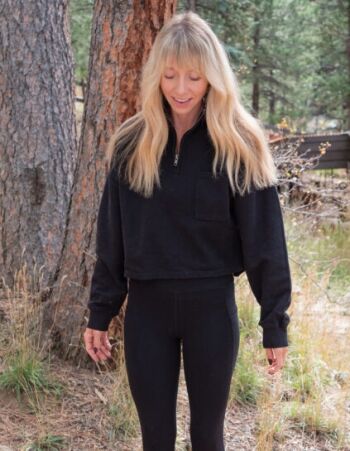
Image by Courtney Jay Higgins for The Good Trade, pictured in MATE.
The Good Trade editors are a diverse team of writers, researchers, and sustainable product enthusiasts. Every recommendation is informed by hands-on testing, rigorous vetting, and years of reporting on the products and practices that shape our daily lives. We are not a marketplace, and we are not owned by a brand. Our editorial team maintains independent standards across every review and recommendation.
Psst! Google launched a new feature that lets you choose “Preferred Sources” — so your searches highlight trusted, values-driven outlets instead of clickbait. To add The Good Trade, tick the box beside our name. That’s it — our stories will be waiting whenever you search. Read more about it here.


