Alternative Ways To Measure The Quality of Your Life
I was recently on the phone with a dear friend who lives abroad, having one of our annual catch-ups. He had so much to share — all about his new role at a prestigious international school, his first year of marriage, and the Spring Break trip they just took to the Baltics. My joy of reconnecting was slightly muted by a familiar dread for the inevitable moment when it was my turn to fill him in on my life.
“My joy of reconnecting was slightly muted by a familiar dread for the inevitable moment when it was my turn to fill him in on my life.”
“What have you been up to?,” he asked. “How’s everything?”
A part of me wanted to say the easy, rote thing — ”Nothing much, same ol’ same ol’…” — while another part of me was already skimming through my inner catalog of highs and lows, searching for something worth sharing.
Though it’s not a competition, I was still aware of the massive disparities of our lives. While we were on the phone, he was boarding a train in Switzerland, where I could hear the announcements repeated in four languages; I was walking the dog around my neighborhood, holding an empty can of seltzer and a bag of poop.
I spend 95% of my time working from home, usually wearing pajamas. Most of the ambitious artistic or personal projects I’d been pursuing have ground to a halt after our daughter was diagnosed with type 1 diabetes — an ongoing emergency roller coaster that hits at random, throwing me into crisis mode just as quickly as I’m dropped back out. The truth is that a lot of my days are spent either in recovery from these events or shoring up my resources so I can be ready for the next one. They aren’t the sort of thing that are always easy to share with people outside of the chronic illness community — everything is somehow both extremely dramatic and also completely unremarkable, but talking about it somehow always feels like being a Debbie Downer.
Still, I also really like my life. It doesn’t feel like the same ol’ same ol’, or like nothing is going on. In fact, most days feel like lifetimes, so jam-packed both logistically and emotionally that I often misremember events from that morning as having happened days or even weeks earlier.
So why was I drawing a blank?
Rating a life
I think we’ve all been here, scrolling through an old friend’s social media feed or preparing for a high school reunion, and suddenly the life we thought was full and interesting just minutes ago feels small and unimpressive. We might scroll back through our own feed or glance around our house with new, mean girl eyes, amazed that we ever thought we were doing okay, when it’s now so clear that we’re actually really far behind, not successful enough or stylish enough or well-traveled, with the wrong hair and the wrong clothes and the wrong car.
“Suddenly the life we thought was full and interesting just minutes ago feels small and unimpressive.”
Because aren’t those the ways that we know that things are going well? The milestones we use to signal that we are intelligent, desirable, prolific, successful, and good, with a timeline that confirms whether we’re doing it all “right” to boot? Every announcement is a call-and-response, a ritual where these culturally accepted events — the graduations, engagements, pregnancies, house purchases — shower the recipient in praise and celebration. “I did the thing!” the caption says. “My life is Good™️ — here’s proof,” the subtext says.
But is it? What happens when you run out of milestones, or you stop having things to announce? What about people who might never be able to afford a house, or remain single their entire lives? Are they doomed to never knowing what it is to be ?
And even if we check every box, hit every milestone, and soak up every possible accolade: Is the quality of our lives determined only by our proximity to these few things? Is the value of our lives diminished without them?
While I was planning this essay, I asked everyone I know how they determine the quality of their life. “How do you know things are going well?” I asked. “When do you feel like your life is good?”
“Is the quality of a life determined only by our proximity to these few things? Is the value of a life diminished without them?”
Most people said variations of similar things: When they have enough security to not feel panicked about money; when they had agency over their time; when their family is happy; when they feel engaged with their work; when they feel appreciated and seen by the people they love; when they are healthy.
Many of these ideas feel universal and mostly true, though having a daughter with a disability has completely shifted my relationship to what we mean when we say “healthy” as a prerequisite to a good life. “Healthy” is relative. “Healthy” — for my daughter, and millions of people in our country — is dependent on their access to health insurance and medication, the right medical team, and institutions that agree to crucial accessibility accommodations. These are variables that we can neither control nor count on. Does this mean that our daughter will never be able to live a Good™️ life?
Then I heard from one of my smartest friends, someone who never fails to say the one thing that always turns my entire ideation upside down in the best way: “I don’t know if measuring our lives by ‘quality’ is the right question,” she said in a voice note. “But I noticed that as I’ve gotten older, I’ve learned to value my life even when I’m suffering. Like my life is meaningful to me even when I’m in pain, or when things are going badly.”
“My life is meaningful to me even when I’m in pain, or when things are going badly.”
Her insight lit up the words inside of me that I hadn’t yet been able to find. Because if we are taught to measure the quality of our lives through metrics that are either good or bad, then aren’t we also taught to believe that a life is only good when everything in it is going well?
Beyond the binary
I don’t know about you, but my life is rarely only going well.
I’m not even talking about the difference between living uneventfully or having enough humblebrags to fill up a TikToker’s content calendar for the next two years. I mean that there is almost always something happening that is, if not exactly “bad” then definitively not ideal.
“There is almost always something happening that is, if not exactly “bad” then definitively not ideal.”
My car has a mysterious coolant leak that no mechanic can diagnose, which means that I have to drive around with a refill bottle to top it off whenever the light comes on. Our front concrete steps crumbled to dust during an ice storm this winter. My dog Penny has a skin condition that, for 48 hours, I was convinced was ringworm. Some combination of perimenopause and my SSRI have made me gain enough weight that none of my pants fit. I still haven’t finished my novel, despite putting forth my own public campaign for accountability. I am estranged from one of my siblings. My daughter has an incurable chronic illness that costs us a thousand dollars or more per month, even with insurance. The tech that keeps her alive also scars her body, and all of the alarms that litter the background of our days give me migraines.
And, at exactly the same time, this is also true: If I had to describe my life exactly as it is right now in one word, it would be, overwhelmingly, “lucky.”
“At exactly the same time, this is also true: If I had to describe my life exactly as it is right now in one word, it would be, overwhelmingly, ‘lucky.'”
What does it mean to live a good life, when being alive means that bad things happen?
Or, maybe a better question: How do you know that you’re living your life well, even when bad things happen?
The truth is that no one can live a life that remains truly untouched by the bad stuff. We will all experience disappointment, pain, and suffering to some degree. People we love will get sick and die; people we love will not get sick and still die. We will feel the tides of grief as tsunamis or rip tides, and some days it won’t seem possible to ever resurface from such a powerful force.
I have felt such despair many times in my life. I have felt so small and useless, utterly at the mercy of whatever it is that makes these things keep happening. I have felt this as recently as last Tuesday.
And I have learned to trust that I won’t always feel like that forever.
When I get into one of those dark places where it feels as though everything is going wrong, like the world is happening to me in the worst way, I have learned to trust the promise of change.
I really love the metaphor of the Wheel of Fortune, seen in Tarot. Picture a Ferris Wheel: The wheel is always turning, so sometimes, yeah, we’re down. But even if it’s stopped temporarily — to let on more riders, or for a quick repair — it’s going to start moving again. And the only direction it’s going to go is back up.
“I have learned to trust the promise of change.”
I’ve learned that when it comes to so many things in our lives — particularly the sort of milestone-y stuff we typically use as a kind of shorthand to characterize “how it’s going” — the incident itself is as fleeting as the experience of riding on a Ferris Wheel.
Sure, the view from the top is amazing, but it’s not like you just stay up there. You have to keep moving, to keep looking at all the other views. And depending on a number of other factors — like who you’re riding with, or whether you ate too much carnival food, or if you really have to pee — you might not even enjoy your time spent at the top.
You might even have a better time at a different spot on the ride, where the view is less impressive but the breeze was just perfect.
Custom metrics
My life at age 40 has not turned out how I thought it would. In many ways, I’m living my nightmare: I have to face people asking how my book is going, and admit that I’m not working on it. I have to watch as the writers from my MFA and my novel generation cohort sell their books while mine sits in a drawer. I have to figure out how not to let my own dream die because my timeline got interrupted. And I have to figure out how to live well while my dream is on hold.
“I have to figure out how to live well while my dream is on hold.”
I’m also living every parent’s unarticulated nightmare: My child got sick and I can’t cure her. I can’t take this away from her. I can only focus on holding it so that she can be a kid as long as possible. It isn’t perfect; I have to lurk at nearly every playdate, chirping reminders about slowing down or trying to quickly dose her and then disconnect her pump while her friends are eating fistfuls of goldfish and running through sprinklers without a care in the world. It’s disruptive and frustrating for her to have to follow so many rules, to have to stop and deal with the constant needs of her body. But I am working as fast as I can as the world’s clumsiest pit crew so that she can get in that sprinkler — her mouth full of goldfish, her insulin pump safely in my fist.
In all the ways it has fallen short or gone off course, the quality of my life feels better, richer, and more abundant than ever — but how do I know that?
“In all the ways it has fallen short or gone off course, the quality of my life feels better, richer, and more abundant than ever — but how do I know that?”
I suspect that there isn’t a formula, not really — despite the many assertions out there that there might be, I don’t think that “A good quality life” is a one-size-fits-all.
I do think there are some more universal themes we all share, each interpreted through our unique experiences, priorities, and preferences. I might need autonomy over my time, the ability to wander out into my garden in the middle of my work day so I can think through an essay. But someone else might need the accountability and structure of a 9-5 in an office. What might feel constricting to me feels secure to someone them.
So with that in mind, I’ll share some of the measures I use to determine how things are going in my life:
- Alignment: Understanding my core values and living aligned to them is at the heart of my overall wellbeing. It gives me a foundation for accepting what’s in my control and what isn’t, and makes it easier for me to live with the consequences of my actions. It’s a guiding force, one that can set my entire world on its head if I ignore it. I feel free and able to find more clarity when I’m staying true to these values.
- Family: This refers to my innermost circle — both my own little family, but also the people who make up the community I trust most. Investing in these relationships with time, with play, with long walks and rambling voice notes and however else we might be able to connect gives my days the richness and depth I’d never find otherwise. The love between people who know each other at their worst, who see the full breadth of their character at their weakest moments and still show up because they believe in each other that much — this is the stuff of actual magic.
- Recovery: No life is without stress, and investing in my inner resources has become a key pillar of how my life feels. I recover from hard things better, and faster. With so many ups and downs in our days, I’ve invested in the skills and techniques that strengthen my resiliency. I have learned that I can endure much more discomfort and pain than I ever realized, and it’s strengthened my own faith in myself. So even when I’m emotionally consumed with stress, I can intellectually rely on the tools that I know will help me survive it. I believe that I can get through it, and I invest in the resources that I know will make that true.
Here’s what I believe: As long as I am investing in these areas, I can more or less handle whatever happens when the Wheel is at the bottom. Which opens up the possibility of finding meaning and value in places we haven’t been taught to look.
This doesn’t make it easier to share headlines with a friend during a once-a-year catch-up. But if your friend is a good one like mine, they aren’t waiting for you to impress them with flashy updates. The Instagram highlight reel is a top-level, surface-skimming review, and rarely tells the whole story of anyone’s life. Our friends want the real story; our friends want the truth.
I didn’t have a job promotion or a cool vacation to share with my friend. Instead, I told this story about overhearing my daughter talking with her babysitter the other day: The babysitter had forgotten to put on sunscreen, and when my daughter asked her why she forgot, the babysitter said, “I don’t know, I was just stupid.”
And my 6-year-old said, “No, you’re not. And you shouldn’t say you’re stupid, because the more you do, the more you’ll start to believe it.”
“There’s no milestone marker for developing your child’s character, after all. And yet what could give my life as a mother more meaning than that?”
This is something I have said to my daughter, and to hear her parrot it back like this is one of those moments in parenthood that feel enormous. But it’s also something that’s easy to forget about, to let fade into the general soup of a busy day. There’s no milestone marker for developing your child’s character, after all. And yet what could give my life as a mother more meaning than that?
When I heard her sweet voice say those words, to say my heart swelled with pride is a catastrophic understatement. Which makes me wonder: What else are we overlooking? What are the other parts of our lives give us purpose that we might be undervaluing, just because they’re quiet?
Maybe we’ve been framing everything with the wrong questions. Maybe instead of thinking about our lives in broad strokes, we should give more weight to the details — to the small things, the routines, the daily treasures that we can only see when we’ve learned how to look for them.
Maybe we shouldn’t only be asking ourselves what we like about our life when it’s going well. Maybe we need to start asking what makes our lives Good™️ even when they’re not going well — when we’re sad, stuck, reeling from grief.
I’m sad, stuck, reeling from grief — and I also know without doubt that my life is still good.
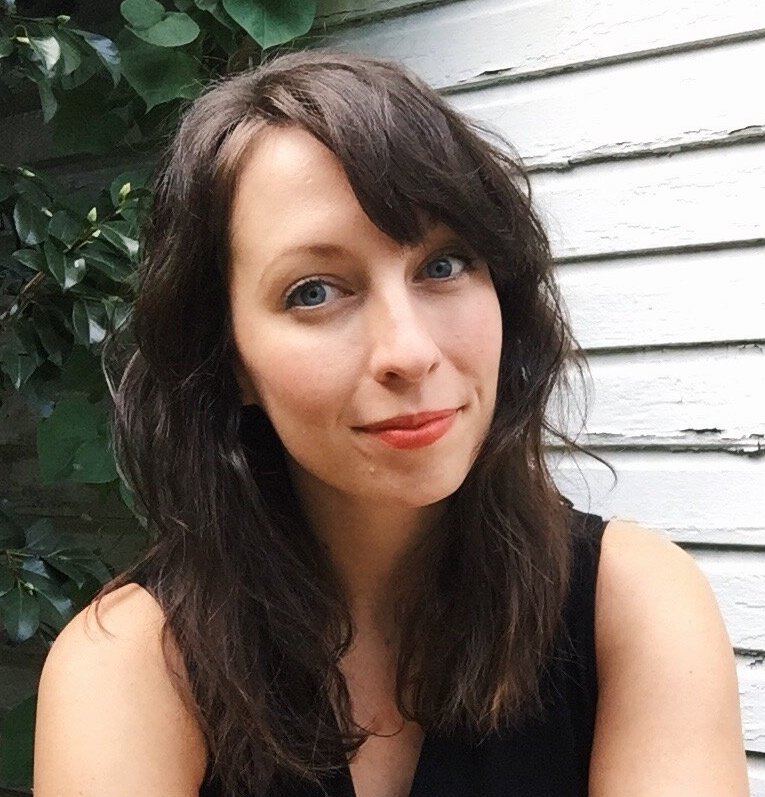
Stephanie H. Fallon is a Contributing Editor at The Good Trade. She is a writer originally from Houston, Texas and holds an MFA from the Jackson Center of Creative Writing at Hollins University. She lives with her family in the Blue Ridge Mountains of Virginia, and she is the author of Finishing Lines, where she writes about her fear of finishing, living a creative life, and (medical) motherhood. Since 2022, she has been reviewing sustainable home and lifestyle brands, fact-checking sustainability claims, and bringing her sharp editorial skills to every product review. Say hi on Instagram or on her website.