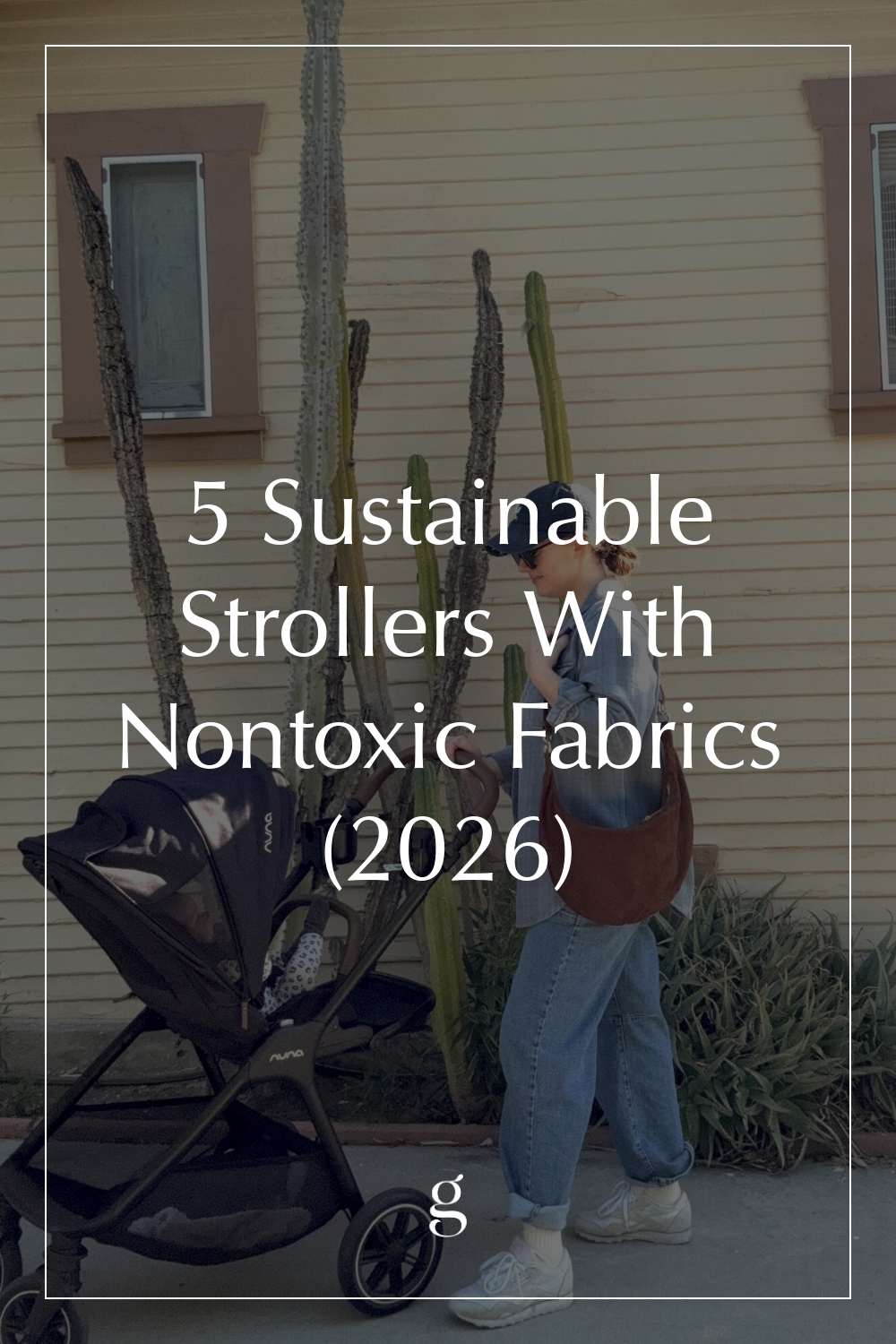
5 Sustainable Strollers With Nontoxic Fabrics (2026)
The Good Trade editors endorse products we’ve personally researched, tested, and genuinely love. Learn more about our methodology and business model here.
Our team has tested and researched dozens of strollers for our babies — these are our top selections for safety, non-toxic materials, and design across a range of price points.
You know what baby gear isn’t really optional? A stroller. For most parents, it’s part of daily survival. It’s how we get out of the house when we’re exhausted, how we squeeze in fresh air when the days feel long, and how we manage errands, walks, travel, and life with a baby (or toddler) in tow. Our strollers get folded and unfolded, lifted in and out of the trunk with one hand, and pushed over cracked sidewalks while we’re juggling coffee, snacks, and everything else we bring “just in case.”
Because of all that, a stroller has to work — and work well. It needs to be lightweight but sturdy, easy to maneuver, ergonomic for tired bodies, and comfortable enough that our baby actually wants to sit (and hopefully nap) in it. When we finally make it outside for a walk, we want it to feel calming and enjoyable, not like another thing to wrestle with.
And once those basics are covered, many of us start thinking about something else: what our baby is actually sitting in. Stroller seats and straps are in constant contact with their skin (and mouth, iykyk), and not all fabrics are created equal. Some are treated with flame retardants, PFAS (often called “forever chemicals”), and other synthetic finishes we’d rather keep out of our children’s everyday environment. That’s usually when the search begins for a stroller that functions beautifully and is made from safer materials.
The good news? Parents don’t have to choose between performance and peace of mind — not anymore. More brands are finally listening and designing strollers that are lightweight, thoughtfully engineered, and made with non-toxic fabrics that support babies’ comfort and our sanity. The strollers below are raising the bar, and as very tired parents, we’re genuinely grateful for it.
| Price | Best For | Nontoxic Materials | Standout Features | |
| Nuna | $425+ | Everyday use | GREENGUARD Gold; some models with Merino wool & TENCEL™ | Lightweight frame options, UPF50+ canopies, smooth suspension, easy fold |
| UPPAbaby | $250+ | Flexible configurations | GREENGUARD Gold; meets flammability standards w/o harmful flame retardants | Expandable seating (single → double), reversible seats, large storage |
| Bumbleride | $799+ | All-terrain activities | OEKO-TEX® Standard 100 (Class I); no PFAS, flame retardants, BPA, phthalates | Air-filled tires, all-wheel suspension, roomy storage, lay-flat options |
| Zoe | $250+ | Travel stroller | GREENGUARD Gold; free from flame retardants, BPA, PFAS, phthalates, PAH, formaldehyde; food-grade waterproofing | Compact/lightweight fold, car seat compatibility, breathable textiles |
| Guava Roam | $650+ | Running families | GREENGUARD Gold; free from flame retardants, PFAS, PVC | Remote-locking front wheel, airless all-terrain tires, independent suspension |
What stroller materials are safest for everyday use?
If you’re trying to limit unnecessary chemical exposure (without sacrificing comfort or practicality), here are some fabrics and certifications that are worth paying attention to:
GREENGUARD GOLD certified fabrics
Products with this certification are tested for low chemical emissions, especially volatile organic compounds (VOCs), which can off-gas into the air and contribute to indoor air pollution. GREENGUARD Gold is a more stringent standard designed for sensitive groups, such as children. This means certified products tend to release fewer chemicals into the air than uncertified ones, which can be beneficial for items your baby uses frequently.
Organic cotton
Organic cotton is grown without synthetic pesticides or fertilizers, and because it’s a natural fiber, it doesn’t typically require chemical finishes. That makes it a good choice for breathability and comfort, especially next to baby’s skin. Many stroller brands that prioritize safer materials use cotton certified organic or GOTS (Global Organic Textile Standard).
Wool or wool-blend fabrics
Wool has natural temperature-regulating properties and is inherently more flame-resistant than many synthetic fibers, allowing some manufacturers to avoid adding chemical flame retardants to meet safety standards. That said, true wool-blend strollers are less common than polyester, and you’ll want to check whether manufacturers treat wool in other ways.
Responsibly made recycled fabrics
Many strollers use polyester or nylon — because these materials are durable and easy to clean — but you can find versions made from recycled PET or other recycled inputs. These don’t automatically guarantee “non-toxic,” but some brands are certified (e.g., OEKO-TEX or GREENGUARD) or make explicit claims to be free of PFAS and flame retardants to minimize harmful chemical treatments.
A few nuances worth noting:
- “Non-toxic” doesn’t have a single legal definition for strollers — no stroller can realistically be 100% free of all synthetics and chemicals, and there’s no mandatory safety test for fabrics the way there is for car seats or cribs.
- Certifications like GREENGUARD Gold focus on emissions, not every possible harmful ingredient — so they’re one sound signal, but not a guarantee of zero exposure.
- Labels such as OEKO-TEX or GOTS can also be strong indicators of low chemical residue levels, especially for fabrics that come into contact with skin.
Our criteria:
There’s no shortage of stroller options, from long-standing baby brands to newer, sustainability-focused companies. To help simplify the decision, we’ve curated this list using the criteria below and regularly update it as better materials and innovations emerge.
- NONTOXIC MATERIALS | We prioritize strollers made without harmful chemicals like flame retardants, PFAS, BPA, and phthalates. Many of our picks feature GREENGUARD GOLD certified fabrics, organic textiles, or naturally resilient materials like wool.
- DESIGN, SAFETY & FUNCTIONALITY | Every stroller we recommend meets essential safety standards while offering thoughtful, practical design — from ergonomic seating to sturdy construction that lasts through multiple stages (and siblings).
- SUSTAINABILITY & VALUE | Our selections span a range of price points, but each one delivers strong value through durability, responsible sourcing, and safer materials. Investing in a well-made, non-toxic stroller isn’t just a purchase — it’s a long-term investment in your family’s health and a more sustainable future.
Looking for more nontoxic baby gear? Check out our guide to nontoxic carseats and our Nuna stroller review.
1. Nuna
Best For | Everyday strollers, travel systems, and parents who want premium design with safer materials
Nontoxic Materials | GREENGUARD Gold certified fabrics; select models feature Merino wool + TENCEL™ lyocell inserts
Features We Love | Lightweight designs, UPF 50+ canopies, single-hand fold, smooth suspension, near-flat recline options, generous storage baskets, 360 swivel wheels
Prices Starting At | $425+
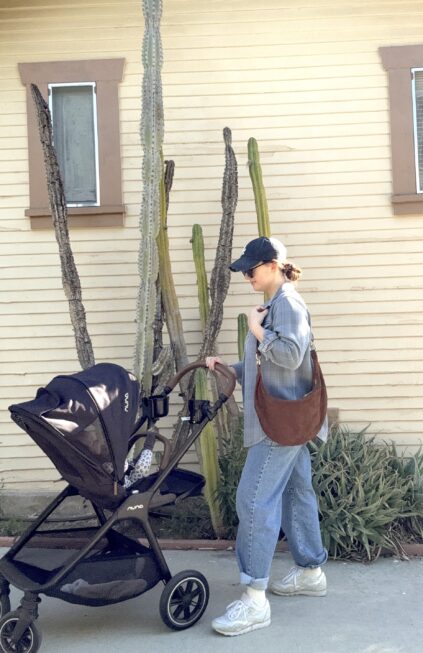
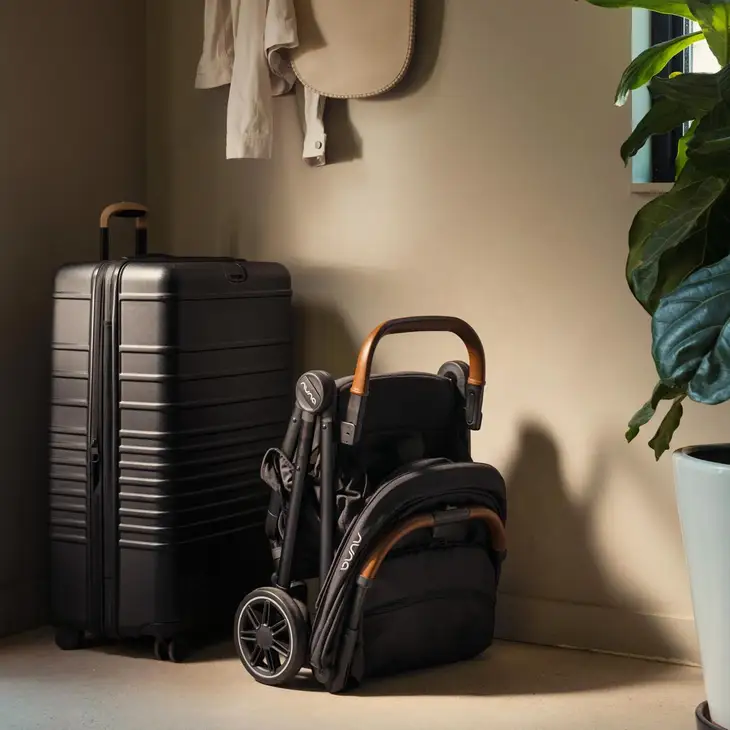
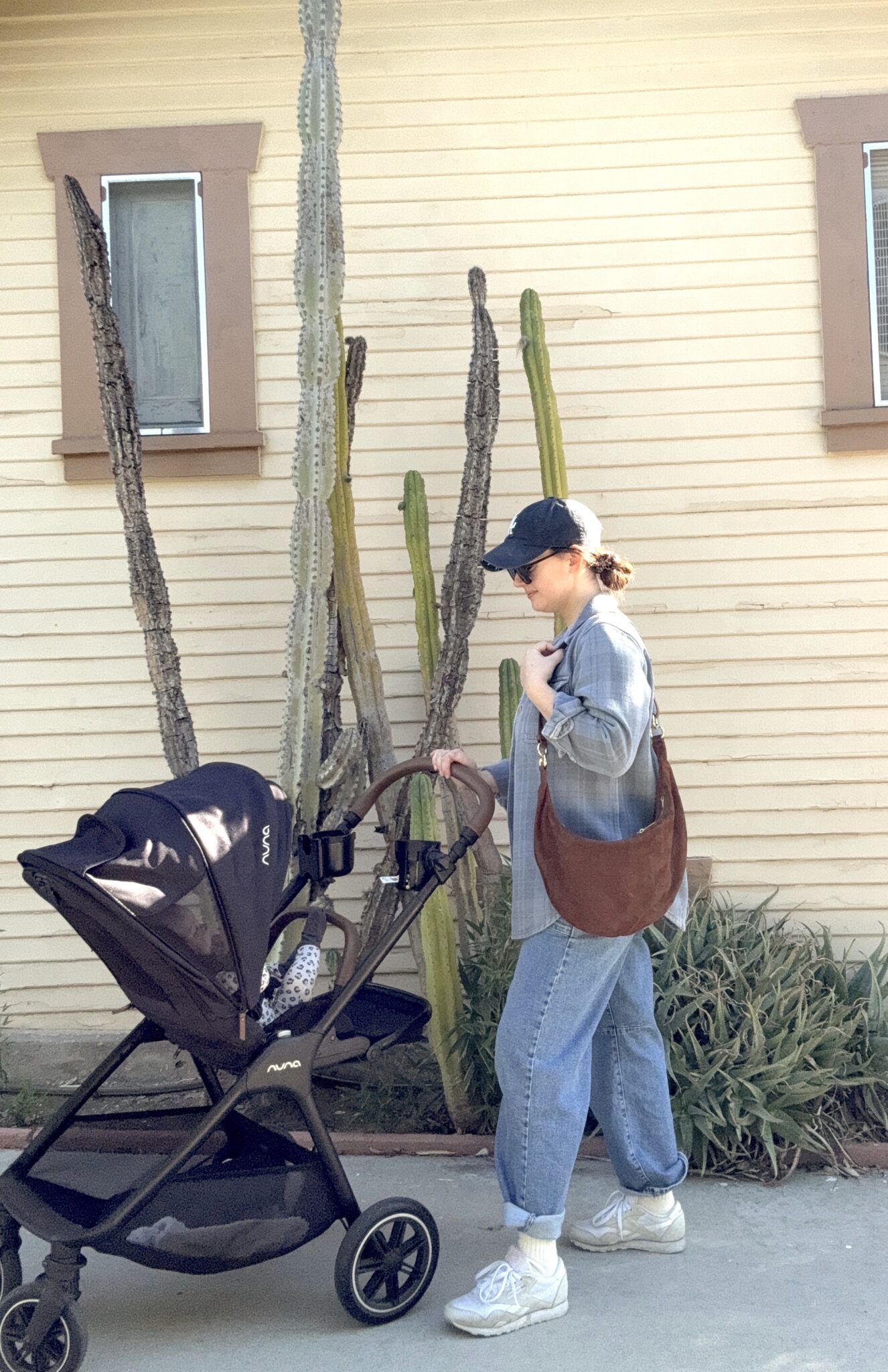
Nuna is a go-to brand for parents seeking a high-quality, non-toxic stroller built for daily use. It’s the brand our editors love and trust most (read our Nuna review here) because the carseats and strollers are thoughtfully designed for real life — they are easy to fold, smooth to push, and comfortable for even the most wiggly baby. The SWIV, for example, has a lightweight carbon fiber-reinforced aluminum frame, one-touch braking for safety, and a button-activated 360° rotation on all 4 wheels, enabling side-to-side motion and instant pivot navigation. Fancy, no!?
Many Nuna strollers are GREENGUARD Gold Certified, meaning they meet strict standards for low chemical emissions. This matters for strollers, where babies are in close contact with the seat fabric and canopy. Some models, like the Nuna TRIV next, also include a removable insert made with Merino wool and TENCEL™ lyocell, which are naturally breathable and gentle on baby’s skin.
Functionally, Nuna strollers are both comfortable and convenient. The TRVL is especially popular for travel thanks to the lightweight frame and self-folding design (our editors have taken them on flights with ease), while the MIXX next works well as an everyday stroller with its smooth suspension, supportive recline, and spacious storage basket.
If you’re searching for a stroller that’s easy to use, comfortable for your baby, and made with safer materials, Nuna is a reliable, well-designed option that holds up to everyday life.
2. UPPAbaby
Best For | Growing families who want a stroller system with flexible configurations (including options that support multiple kids, depending on model)
Nontoxic Materials | GREENGUARD Gold certified strollers (low chemical emissions), products meet applicable flammability standards without brominated/chlorinated chemicals like PBBs/PBDEs
Features We Love | Expandable seating (single to double), large UPF 50+ canopies, reversible seats, generous storage baskets, smooth suspension, adjustable handlebars
Prices Starting At |$250+
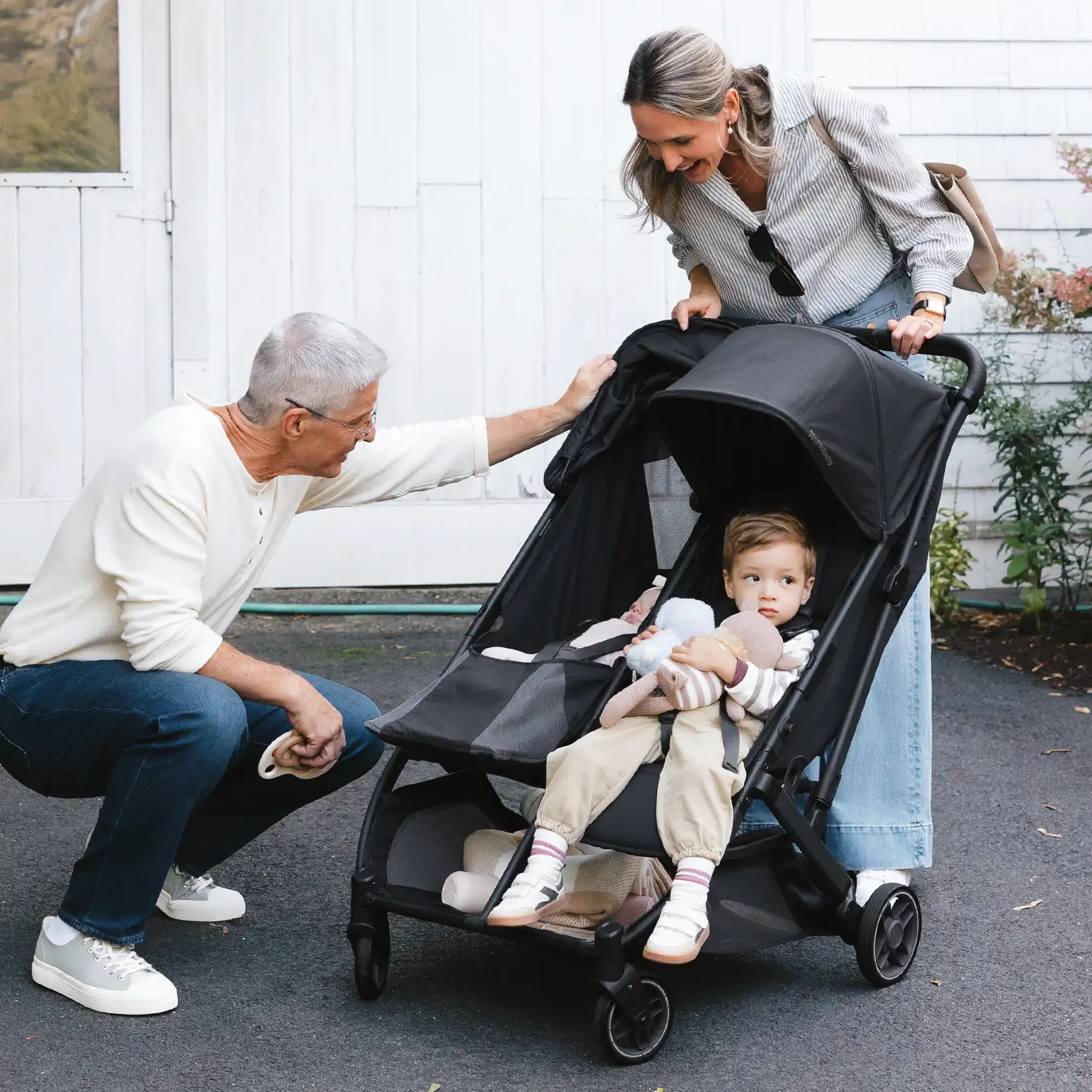
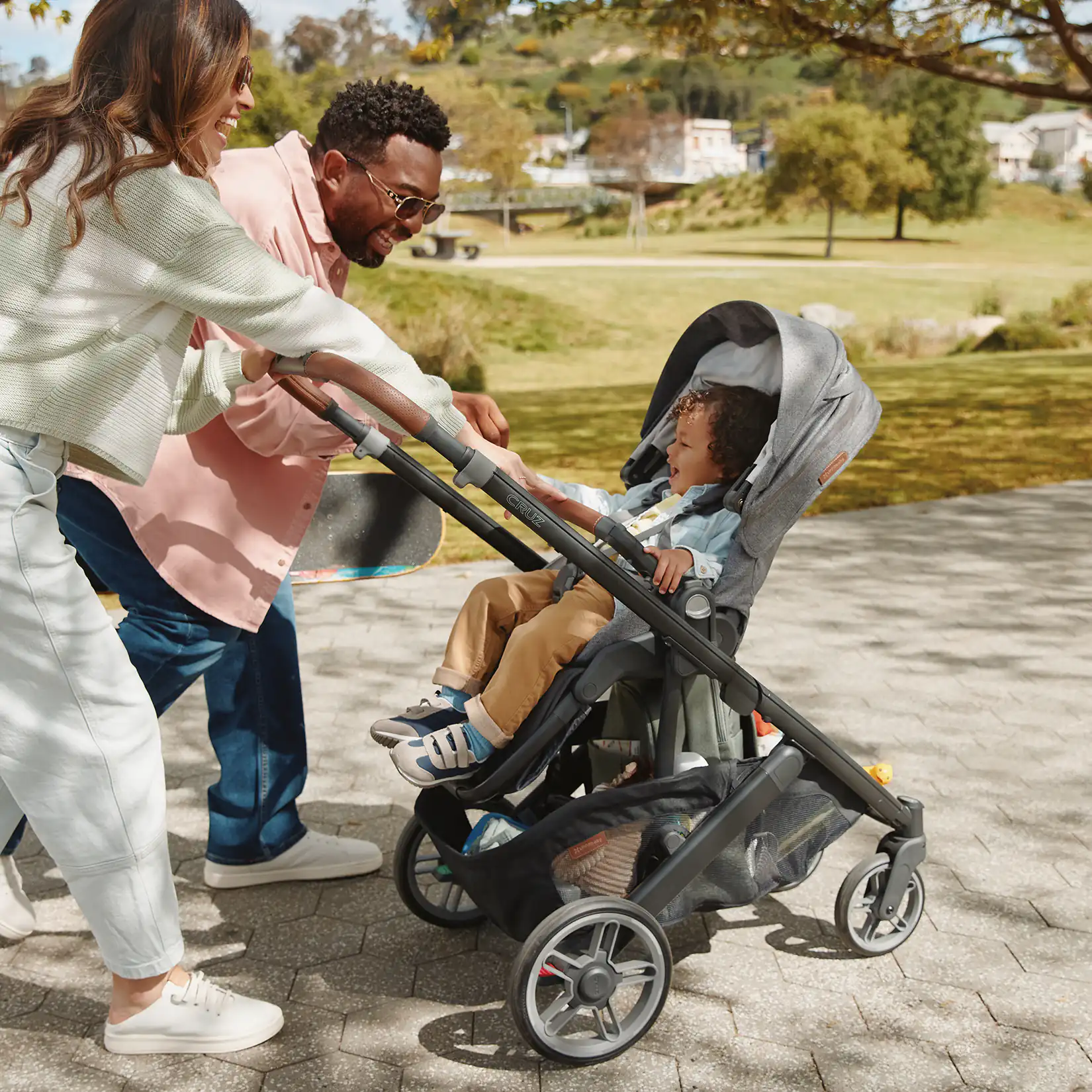
UPPAbaby is a brand we love and trust for baby gear that is solid, intuitive, and built to last. The strollers are designed for daily use — they are easy to steer, steady on uneven sidewalks, and spacious enough to carry everything that somehow comes along for every outing.
On the materials side, many UPPAbaby strollers are GREENGUARD Gold Certified, meeting the strict standards for low chemical emissions. The brand also states that its products meet required flammability standards without using certain brominated or chlorinated flame-retardant chemicals, which is an important consideration for fabric safety.
What really sets UPPAbaby apart, though, is the flexibility. Models like the Vista V3 are designed to adapt as your family grows, with options to move from a single stroller to configurations that accommodate multiple children (a huge sustainability win since you don’t need to get a new stroller). Reversible seats, large UPF 50+ canopies, and cushioned, adjustable seating help keep babies comfortable from newborn days through toddlerhood.
3. Bumbleride
Best For | Active families who want an all-terrain stroller with a strong focus on safer, eco-conscious materials
Nontoxic Materials | OEKO-TEX® Standard 100 (Class I)–certified fabrics made from 100% recycled PET; free from flame retardants, PFAS, BPA, phthalates, PVC, lead, formaldehyde, and chlorine
Features | Air-filled tires, all-wheel suspension, reversible or lay-flat seating (model dependent), UPF canopy, roomy under-seat storage
Prices Starting At | ~$799+
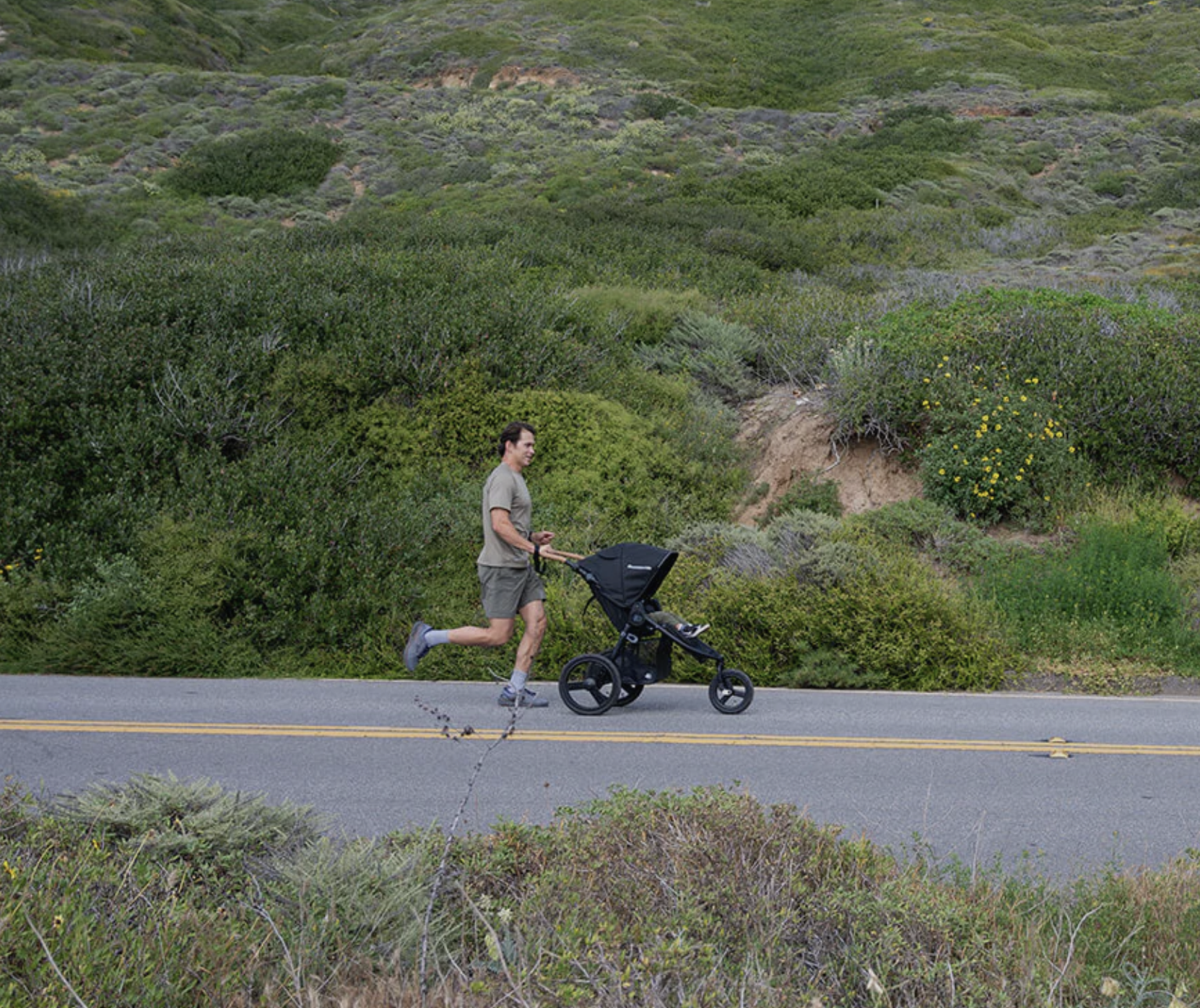
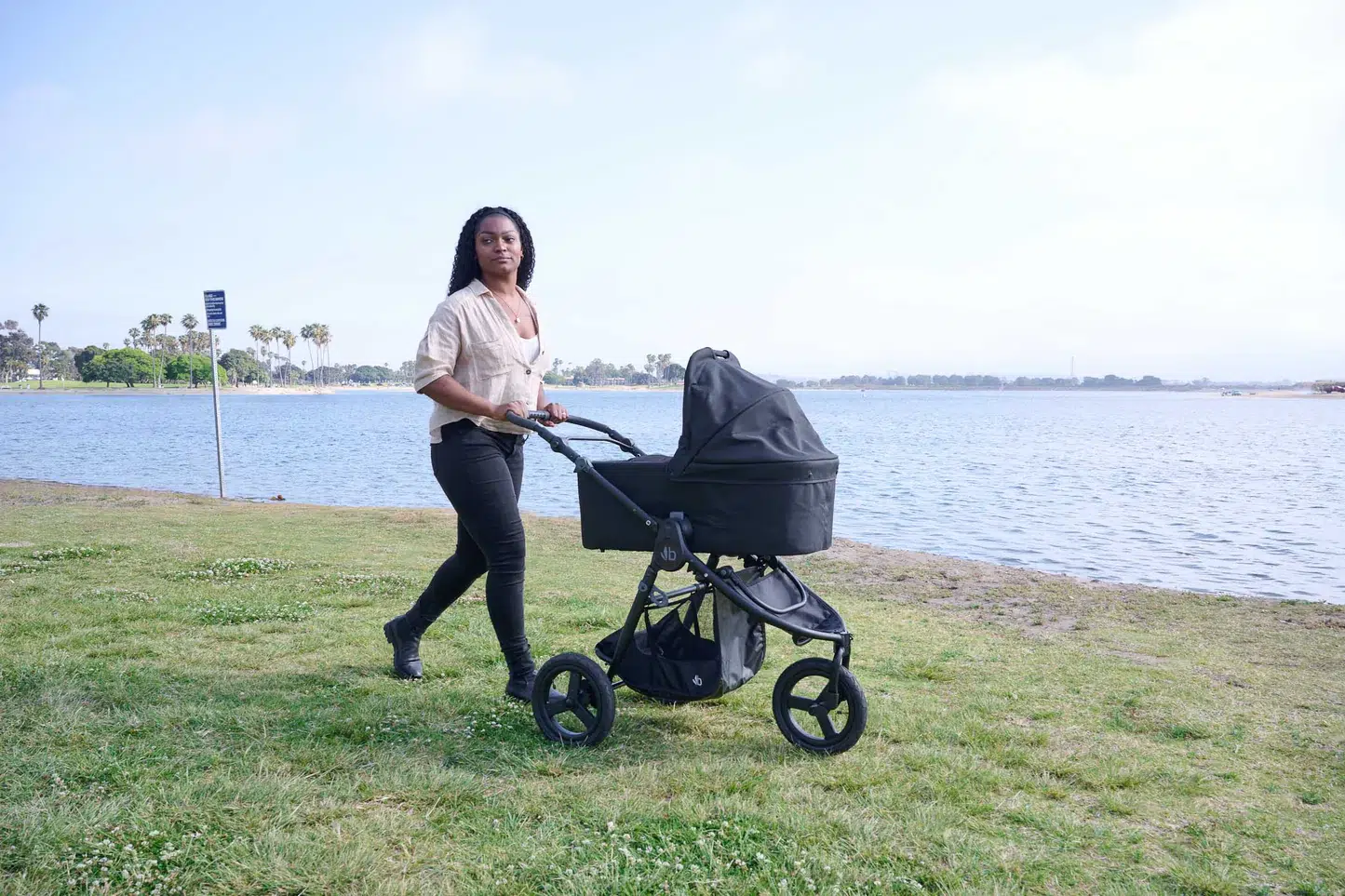
Bumbleride is ideal for highly active parents or for those who live in rural areas. The stroller is designed for uneven sidewalks, dirt paths, and everywhere in between. The air-filled tires and full suspension make a noticeable difference on rougher terrain and deliver durability without compromising comfort.
Materials are where Bumbleride really stands apart, though. All stroller fabrics and padding are OEKO-TEX Standard 100, Class I certified, meaning they’re tested for harmful substances and considered safe for direct contact with babies. The brand also states its strollers are made without common chemical additives parents often try to avoid, including flame retardants and PFAS. Fabrics are produced from 100% recycled plastic bottles, balancing durability with a lower environmental footprint.
Moreover, these stroller seats are padded and supportive, and many models recline or lie flat for newborn use. The canopies offer ample coverage for longer outings, and the double stroller is perfect for twins or siblings.
4. Zoe
Best For | Lightweight, travel-ready strollers that are easy to fold, expandable for growing families, and tested for everyday comfort and safety
Nontoxic Materials | GREENGUARD Gold certified stroller fabrics; free from added flame retardants; free from BPA, pesticides, PFAS, phthalates, polycyclic aromatic hydrocarbons (PAH), and formaldehyde; waterproofing via food-grade polyethylene coating
Features | Compact and lightweight fold, car seat compatibility (select models), convertible for siblings/multiples, UPF 50 fabrics, solid or all-terrain wheels (model dependent), breathable knit seats
Prices Starting At | $250+
Meet Zoe. These strollers are designed for parents who want practical, everyday performance plus peace of mind on materials. Every stroller is GREENGUARD Gold Certified, and the brand is very transparent about what it uses (and doesn’t use). The fabrics are durable and easy to clean, but they’re also naturally flame-resistant. Zoe strollers are also Baby Safety Alliance Verified, meaning they meet independent third-party safety and performance standards, as well as chemical testing.
According to the brand, these strollers are made without BPA, pesticides, PFAS, phthalates, PAH, or formaldehyde — and even the waterproofing is handled without extra chemical treatments. The lineup includes travel-friendly strollers and modular choices to grow with your family. As for features, it has all the bells and whistles, including UPF 50+ canopies, breathable seat fabrics, and thoughtfully engineered frames that balance comfort for baby with convenience for parents. Plus, the name is so cute!
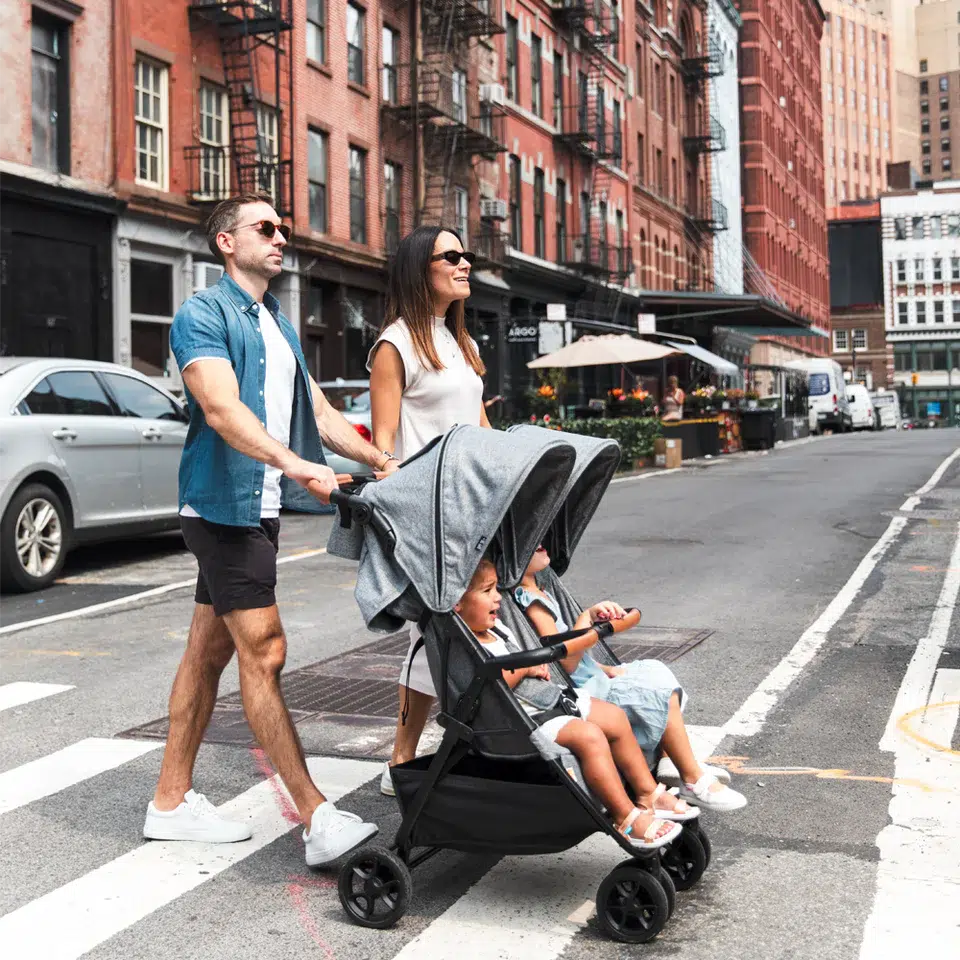
5. Guava Roam
Best For | Active parents who want one stroller that can handle daily walks and real runs
Nontoxic Materials | GREENGUARD Gold–certified fabrics; free from added flame retardants, PFAS, and PVC
Features | Remote-locking front wheel, airless all-terrain tires, independent suspension, adjustable handlebar, compact one-hand fold that stands upright, seat supports kids up to 60 lbs
Prices Starting At | $650
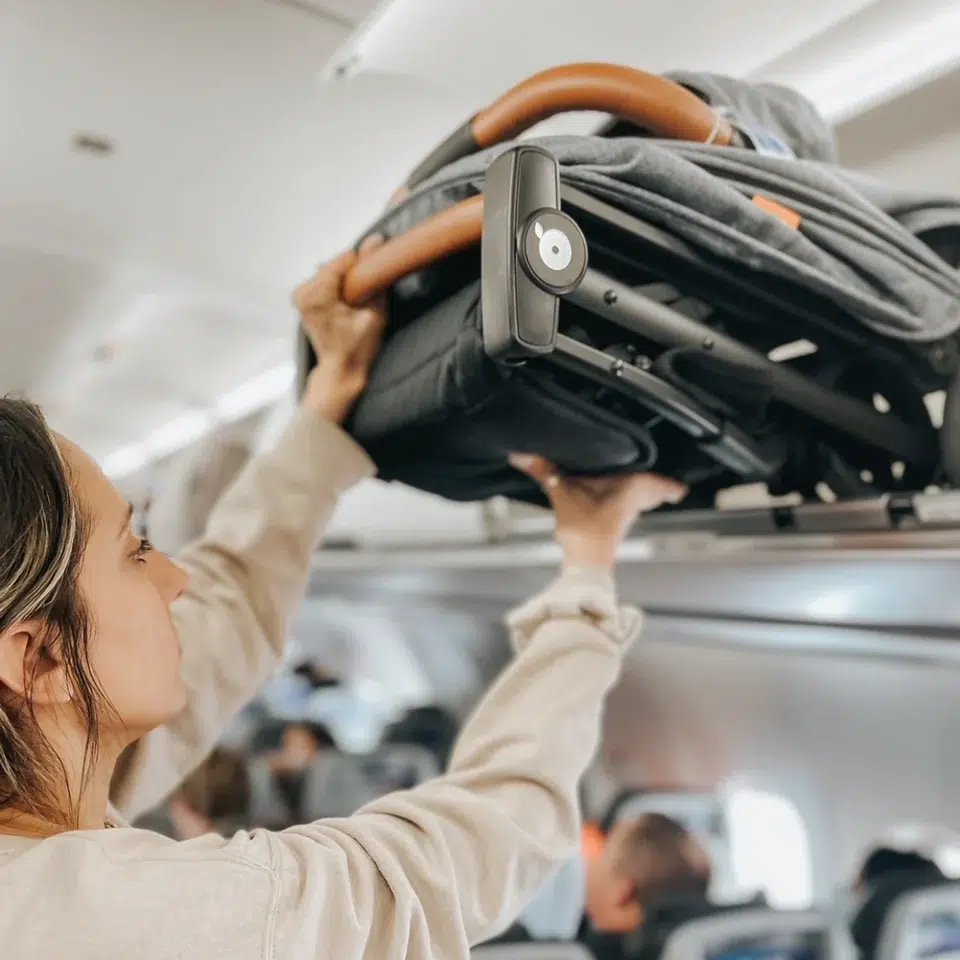
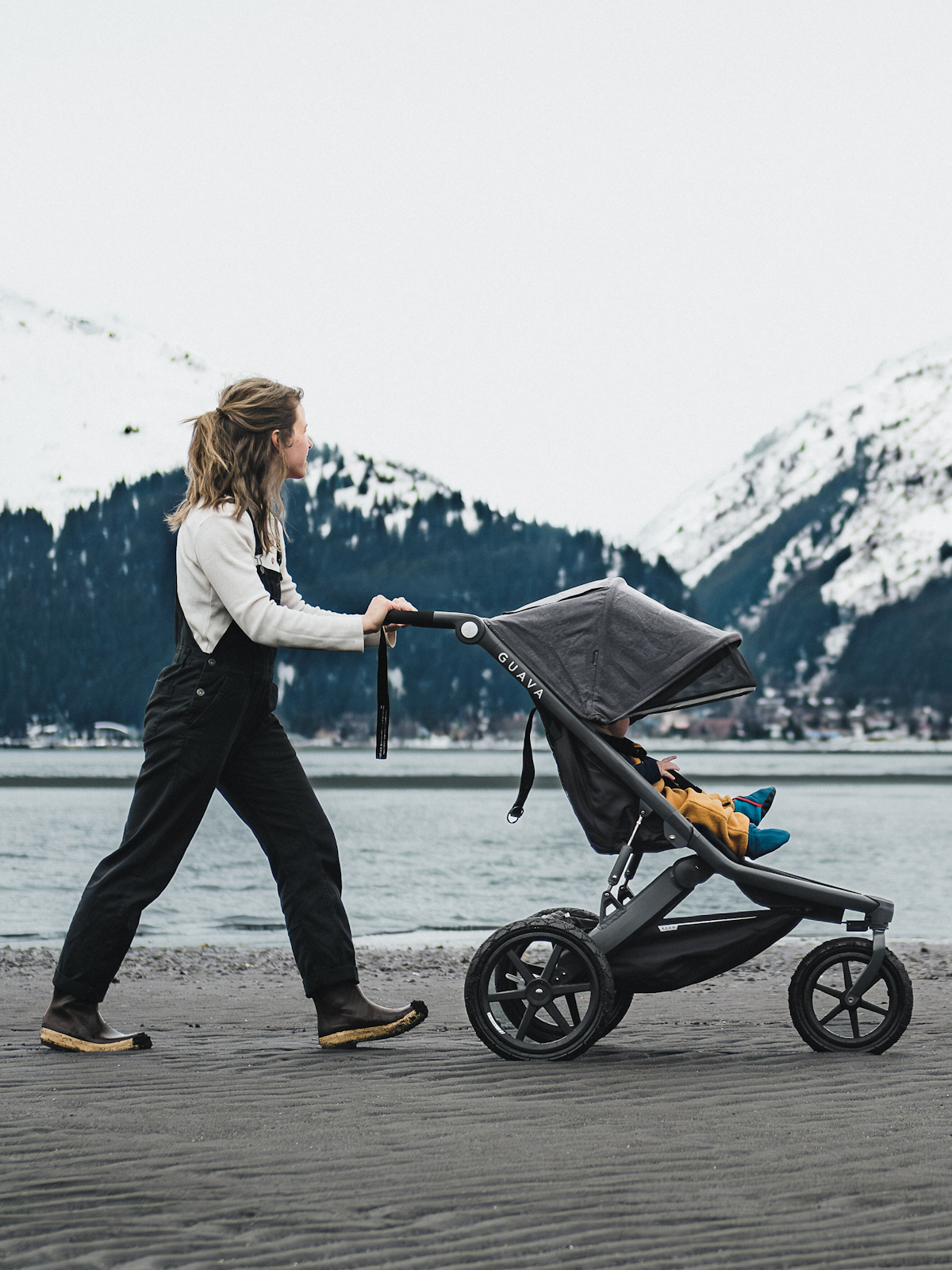
The Guava Roam is built like a jogging stroller but without the clunky, oversized feel that usually comes with one. We appreciate that we can use it for real runs or everyday walks and errands without feeling like we’re pushing a tank. One of the best features is the remote-locking front wheel, which lets you switch from stroll mode to run mode right from the handlebars. Add in airless tires (no flats, ever) and independent suspension, and you get a ride that’s steady and comfortable even when the terrain isn’t.
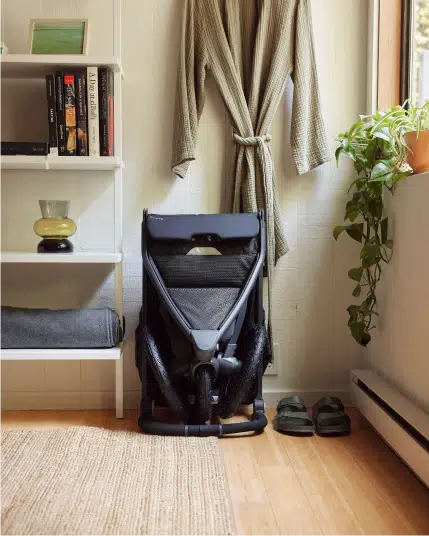
And for a jogger, it’s surprisingly compact. It folds down smaller than most and stands on its own, making it much easier to get in and out of the car. The seat reclines for on-the-go naps, supports children up to 60 pounds, and is suitable from around six months — or from birth with a car seat adapter. Material-wise, the Roam is GREENGUARD Gold Certified, while the seat fabrics and sunshade are polyester. Read our editor’s review of the Guava pack-n-play to learn more about why we love this brand so much.
Note: earlier Roam models made between 2020 and 2021 were recalled due to a brake issue. Newer models aren’t affected, but it’s worth double-checking if you’re buying secondhand.
Kayti Christian is a Senior Content Strategist at The Good Trade. With an MFA in Nonfiction Creative Writing, her work has appeared in TODAY, Shondaland, and The New York Times. Since 2017, Kayti has been uncovering and reviewing the best sustainable home brands and wellness products. Her personal journey through four years of fertility treatments has inspired her to write extensively about women’s healthcare and reproductive access. Beyond her work at The Good Trade, Kayti is the creator of phone notes, a Substack newsletter with 7,000 subscribers, and the cohost of the FriedEggs Podcast, which delves into IVF and infertility.