

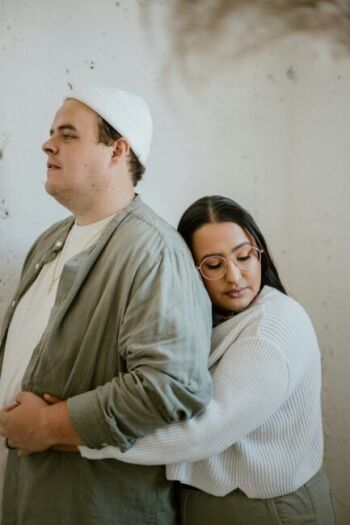
You Don’t Have To Wait To Heal Before Getting Into A Relationship, Here’s Why

Knowing the right time to start dating after a breakup isn’t an exact science, and conventional wisdom says you should be completely healed before venturing back into the dating pool. For many people, especially those coming out of painful breakups involving betrayal or toxic partners, it makes sense to take as much time as they need to process the pain and recover. But for others, dating before they feel truly ready might actually be healthier. We can become more self-aware on our own, but it’s not until we’re in a relationship with someone that we’re tested and get to practice what we’ve learned.
“We can become more self-aware on our own, but it’s not until we’re in a relationship with someone that we’re tested and get to practice what we’ve learned.”
As a psychotherapist specializing in relationships, I often meet clients who are stuck after a relationship ends. I guide them from ruminating and crying to processing and moving on. Once the initial sadness subsides, we work on identifying what the relationship taught them about themselves. This is important work and can lead to happier relationships: owning your part, forgiving yourself for what you didn’t know, and envisioning the type of partner you want next.
Many of my clients falsely believe they need to be 100% comfortable on their own and fully healed before creating intimacy with someone new. “Moving on” is associated with fewer ruminating thoughts about your ex, but research suggests you can move on without fully processing your last relationship. Some healing can only happen in relationships — when we get triggered in ways we don’t when we’re single.
How much time do we need to recover from a relationship?
Everyone has their own timeline; healing is a process, not an event. Some people start grieving their relationship while they are still in it, and when it’s finally over, they’re ready to date.
“Everyone has their own timeline; healing is a process not an event.”
That was the case with a client going through a multi-year divorce: The week after it ended, he met someone new online who was also recently divorced, and the two built a happily-(enough)ever-after union.
Another client needed to grieve both her husband’s infidelity and his decision to divorce her and marry the affair partner. For her, the betrayal was one of many in her history and caused PTSD. Processing the losses and the insecurities they triggered took over a year.
There is no such thing as being fully healed. Rather than adhering to a specific timeline, look inside yourself for signs you are ready, and not just avoiding the deeper work necessary to become a better partner.
You might be ready to date if you:
- Want a relationship but don’t need one
- Know what you are looking for in a partner
- Feel confident you could stop seeing someone who isn’t a good fit
- Know what you want to do differently in your next relationship
- Have used past relationships to develop your relationship skills
- Have space in your life for a relationship
- Don’t feel unhappy being alone
- Know that there are no perfect partners or relationships, and that relationships take work
- Won’t run at the first bump in the road
- Can take responsibility for your part in an argument and apologize
- Can sit with uncertainty without needing to fix it or run away
- Can show you care when their feelings are hurt
- Can set boundaries for what you don’t want or won’t work for you
Why wait?
Sometimes the desire to feel healed before dating is healthy. There is nothing wrong with choosing to be alone or opting to take time to work on yourself. Other times, it comes from a mix of fear and perfectionism — the belief that we have to eliminate all fear before we deserve a healthy partner, and that we have to be perfect to be loved. If we’re flawless, we will find the perfect partner and not get hurt again.
Common reasons we postpone dating:
- Perfectionism
- Idealizing your ex
- Fear of getting hurt
- Trust, in a potential partner and yourself
Shocking truth: There are no perfect partners, and no perfect relationships. There are just lots of imperfectly perfect people doing the best they can. It’s your job to find the one who is good enough for you and whose values, needs, and way of relating are compatible with yours.
“Shocking truth: There are no perfect partners, and no perfect relationships.”
We’re all works in progress. If you are resistant to dating after a breakup, close your eyes and identify the feelings and thoughts that arise when you consider taking a step towards meeting someone new. This might tell you what negative future fantasy you’ve created that is getting in the way.
If your last relationship was particularly painful, it’s normal to resist trying again and to doubt that a healthy partner exists who can meet your needs. Sometimes a protector part tries to keep you safe under the guise of trying one more healing modality or losing ten more pounds before you put yourself out there.
Although this protector part is trying to keep you safe, it’s operating under a false premise: that if you are perfect, you can prevent the emotional risks of dating. Instead of trying to eliminate risk, it’s more effective to focus on identifying red flags and deciding what steps you’ll take to set boundaries when one shows up.
Relationships grow us
Research suggests that healing doesn’t necessarily need to come before intimacy. People who are slow to get back out there often overlook the relational side of healing. We can work on ourselves for years and still not see how much we have healed until we navigate communication, conflict, and repair with another person.
No one has worked through all of their wounds — and relationships are a catalyst for growth. We can attend every healing retreat and understand exactly why we acted as we did in a past relationship, and still not know whether we can apply these lessons in the next one. It’s a bit like learning a language: If you’ve taken French classes, you wouldn’t skip a trip to France because your French isn’t perfect. Immersion is often the quickest way to fluency because you can practice, make mistakes, and improve.
“No one has worked through all of their wounds — and relationships are a catalyst for growth.”
Many of us think that healing happens inside us, but we also learn through interaction — we learn trust through trustworthy actions, boundaries by practicing them, communication by communicating, and vulnerability through sharing our inner world with someone who wants to know it.
Much of the wellness movement is very self-focused, built around self-care, and the saying “You can’t love someone else if you don’t love yourself.” It is true that if you struggle to love yourself, it’s hard to let someone else into those unloved places. But the fastest way to truly grow your relationship skills is to be in some sort of relationship, even a close friendship, and to continuously work on how you relate to yourself and others when you get triggered. You can’t control how someone else reacts, but you can control how you show up, communicate your needs, and respond to conflict.
Healthy relationships happen when both show up to do the work; someone who is patient, knows how to apologize, and isn’t judgy improves the chances of having a great partnership.
When not being ready is self-honoring
After a relationship ends, it’s normal to wonder when it’s healthiest to start dating. Sometimes it really is too soon — especially if you are still grieving, processing, or ruminating about your ex.
Dating before you are ready may cause you to inadvertently hurt someone who assumes you are ready; or unfairly compare every date to the best parts of your ex.
You may need more time before dating if:
- You’re in the early stages of grieving, struggling to function
- You’re hoping to get back together
- Intimacy could dysregulate your nervous system because of unhealed trauma
- You’re working through an addiction or untreated mental health issues
When fear is avoidance
One of the hardest things to endure in love is being abandoned or not chosen, especially when the signs pointed otherwise. We often blame ourselves for picking the wrong person and lose trust that we’ll choose better in the future. To make sure that doesn’t happen, a part of ourselves steps in to protect us — often in the form of a long list of reasons we aren’t ready to date. It’s a brilliant survival tactic, but it keeps us from what we really want.
One of the ways trust gets rebuilt in ourselves and others is trustworthy actions over time — and there’s no way to know if someone is reliable, consistent and trustworthy unless you get to know them. When the desire for a relationship outgrows your desire to stay single, you’ll date. To get there, identify your biggest fear —often an irrational belief (I’ll get hurt? I’ll be rejected?) — and know you will survive it, because you already have, are resilient, and you have a growth mindset.
“When the desire for a relationship outgrows your desire to stay single, you’ll date.”
What if you reframed relationship pain? Instead of something to avoid, perhaps pain is something to expect in any relationship — and endurable with consistent emotional safety and a joint willingness to repair ruptures.
Everyone feels some fear when being vulnerable with someone new, but healthy people feel the fear and proceed anyway. If you really want a relationship and are ready, willing, and able to do the work to make it fulfilling, learning how to date for longevity is key.
Dating someone new doesn’t mean you didn’t love your ex. You can get to know new potential partners while also knowing that you loved someone else deeply and it didn’t work out. Keep in mind that if it wasn’t the right fit for them, it wasn’t a right fit for you either, and by dating someone new, you’re opening yourself to a better one.
Dating smart: It takes a village
Trusting your ability to pick a good partner is a big responsibility, especially after a painful or confusing breakup. Build a support system of trusted friends, a coach or therapist, or even an AI chatbot to help you take healthy steps. Tell them about your dates, ask what you should be considering when vetting healthy partners.
I recently reconnected with a client who started dating just after her divorce from a 20-year marriage. She found a wonderful partner who ticked all the boxes her ex did not: He was kind, caring, and down-to-earth, and he could communicate through differences. He wasn’t perfect, but the connection felt easy and solid.
“She felt happy and confident in her new life and knew she wanted a partner, so why wait?”
When I asked about her decision to date so soon, she said she knew she deserved a happy relationship, knew she was a great partner, and realized life is short. She felt happy and confident in her new life and knew she wanted a partner, so why wait? Navigating the apps and dating protocol was challenging, she said, but once she got used to saying no, recognizing what she didn’t want, and not taking rejection personally, she was ready to say yes when she met her current partner. If she had waited, she would never have met him, and she feels they’re a great fit.
Maybe moving on doesn’t always happen before we meet someone new. Sometimes, meeting someone new is part of moving on.
Rebecca Hendrix, LMFT is a Manhattan-based licensed integrative holistic psychotherapist. She specializes in relationship issues, depression, anxiety, grief, and spiritual growth. You can find her on Instagram or learn more on her website.


